

In power electronics, voltage is not just a specification; it is a defining parameter that shapes efficiency, thermal performance, system cost, and overall design complexity. For many years, designers have primarily operated within two well-established domains. Low-voltage systems, typically in the 12V to 48V range, have dominated consumer electronics and legacy automotive subsystems, while high-voltage platforms, ranging from 400V to 800V, have enabled electric vehicles and industrial systems where maximum power delivery is required. Today, however, a growing class of applications is reshaping that landscape by converging around a different set of requirements.
Across eMobility, robotics, material handling, and industrial automation, system architectures are increasingly adopting battery voltages in the 72V to 144V range. This shift is a direct response to the need for higher power levels without the penalties associated with both low-voltage and high-voltage extremes. As battery voltages move into this mid-range, the requirements placed on power semiconductors evolve as well. In particular, MOSFETs in the 150V to 200V class are emerging as the optimal choice to support these systems.
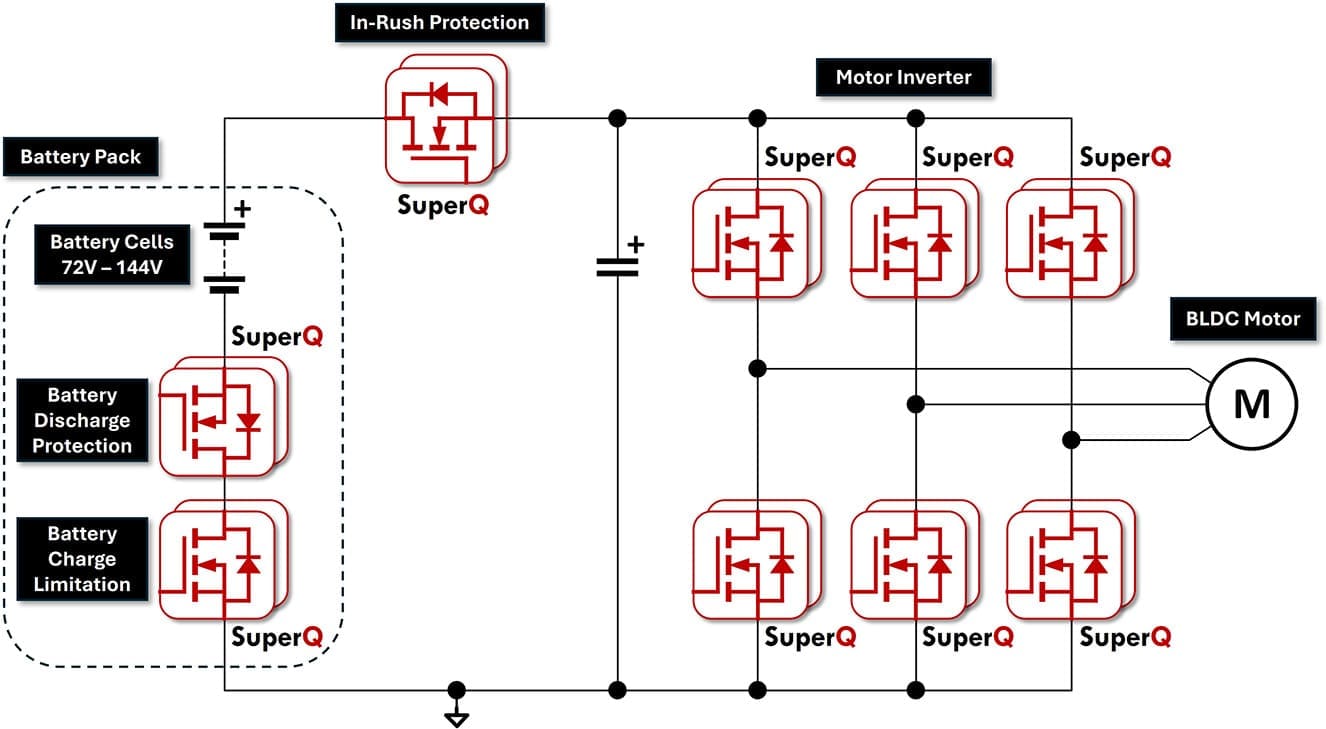
Figure 1: 72V-144V Battery-Operated System Architecture Diagram
Why 72V–144V Batteries Are Gaining Momentum
The move beyond 48V is fundamentally driven by the limitations imposed by current. Applications like electric two- and three-wheelers, autonomous mobile robots (AMRs), warehouse automation systems, and collaborative robots all share a similar profile. They require more power than traditional low-voltage systems can efficiently deliver, but they don’t need, or can’t justify, the complexity and cost of high-voltage architectures.
As power demand increases, delivering energy at lower voltages requires proportionally higher current. Delivering kilowatts of power at 48V means pushing extremely high currents, which increases conduction losses, requires heavier copper, and complicates thermal management. By increasing the battery voltage to 72V, 96V, or 144V, designers can significantly reduce current for the same power level. This reduction in current directly improves efficiency, enables smaller passive components, and allows for more compact and higher power density designs.
At the same time, staying below the high-voltage threshold avoids many of the burdens associated with 400V+ systems: stringent insulation requirements, more complex safety certifications, and higher system cost. As a result, the 72V to 144V battery range has become an attractive middle ground that balances performance, efficiency, and practicality.
Why 150–200V MOSFETs Are the Right Match
As battery voltages increase, selecting the appropriate MOSFET becomes critical. It is not sufficient to simply match the device voltage rating to the nominal battery voltage. Real-world systems experience voltage transients due to switching events, parasitic inductance, regenerative braking, and fault conditions. These transient events can significantly exceed the nominal operating voltage, placing additional stress on the power devices. Designing too close to the voltage limit reduces reliability and increases the risk of failure.
This is why MOSFETs in the 150V to 200V range are becoming the preferred choice for these systems. These devices provide the necessary voltage margin to handle transient conditions while ensuring robust and reliable operation. They also offer designers greater flexibility, allowing systems to operate safely without pushing devices to their limits. In motor drives, battery management systems, and dynamic load applications, this margin is essential for long-term reliability.
Overcoming the Traditional Tradeoffs
Historically, however, increasing the voltage rating of a MOSFET has come with a performance penalty. Higher voltage devices have typically exhibited higher on-resistance, increased gate charge, slower switching speeds, and higher switching losses. These tradeoffs have made designers reluctant to move to higher voltage classes unless necessary, as the resulting efficiency loss could offset the benefits of improved voltage margin.
Recent advances in silicon device architecture are changing this dynamic. SuperQ power MOSFETs are designed to break the traditional relationship between voltage rating and performance. By optimizing device structures and reducing parasitic elements, these devices can deliver low on-resistance and faster switching performance even at higher voltage ratings. This enables designers to achieve both efficiency and reliability without compromise.
Where This Matters Most
This evolution in device performance is particularly important in applications where efficiency directly impacts system operation. In eMobility, for example, electric two- and three-wheelers are increasingly adopting battery systems rated at 72V and above to improve range and performance. Efficient power conversion in these systems directly translates into longer battery life and improved user experience. Similarly, in robotics, higher battery voltages help reduce current and improve efficiency in actuators and power distribution, while compact system design remains critical.
Material handling systems, such as forklifts and autonomous guided vehicles, also benefit from this approach. These systems often operate continuously in demanding environments, where efficiency improvements reduce operating costs and thermal stress, while robust device performance ensures reliability. Across all of these applications, the combination of mid-voltage battery systems and optimized MOSFETs enables a balanced approach to power design.
Looking Ahead
The adoption of 72V to 144V battery systems is expected to continue expanding across a wide range of applications. As electrification spreads into new domains, the need for efficient, cost-effective, and scalable power solutions will only grow.
By pairing mid-voltage battery architectures with high-performance MOSFETs designed for that range, designers can achieve a balance of efficiency, reliability, and simplicity that was previously difficult to attain.
Have a specific design challenge?
Our applications engineers can help you evaluate device selection, optimize switching performance, and validate your design approach.
👉 Browse SuperQ MOSFETs optimized for 72V-144V battery-operated systems: View Products